
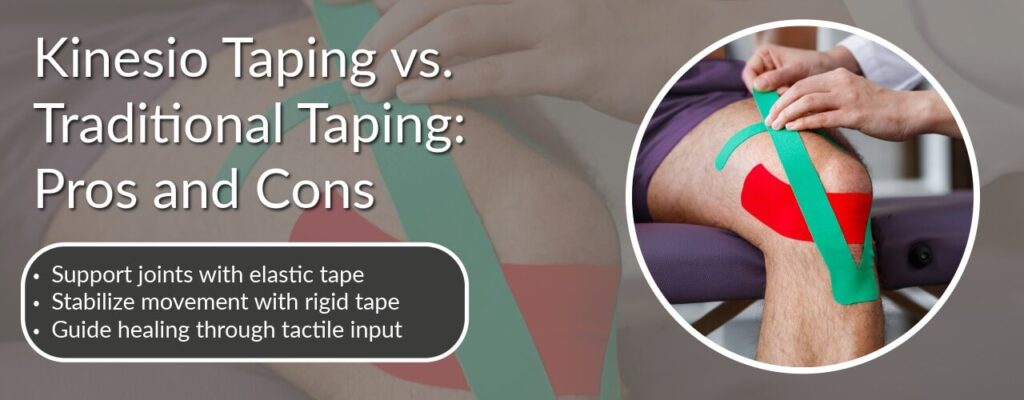
Taping has long been used in physical therapy and sports medicine to support healing, protect injured areas, and improve function during recovery. But not all tape is created equal. When comparing Kinesio taping vs. traditional taping, the differences in flexibility, purpose, and long-term benefits become clear. Both approaches can play an important role in rehabilitation, depending on the individual’s condition and goals.
At The Physical Therapy Institute, we tailor taping strategies to each patient, using either Kinesio or traditional taping techniques as part of a broader treatment plan that helps restore mobility and reduce pain.
What Makes These Taping Methods Different?
Kinesio Taping:
Kinesio tape is elastic, breathable, and designed to mimic the natural stretch of human skin. It can be worn for several days and allows a full range of motion while providing gentle support. This makes it ideal for promoting circulation, reducing swelling, and guiding muscle activation during movement.
Traditional Taping
Traditional athletic tape is rigid and non-elastic. It is typically applied to restrict motion in a joint or muscle, often before sports or high-demand activity. This type of tape provides firm stabilization but must be removed after short-term use.
Both methods are beneficial in physical therapy, but their applications and advantages differ based on the stage of healing and the specific condition being treated.
Kinesio Taping vs. Traditional Taping: When and Why to Use Each One
Choosing between Kinesio taping vs. traditional taping depends on your treatment goals. Each taping technique supports healing in a different way, and understanding the pros and cons of each can help you make an informed decision.
Kinesio Taping
Pros
- Allows full range of motion
- Supports weak or overused muscles without limiting activity
- Improves circulation and lymphatic drainage
- It can reduce inflammation and discomfort
- Comfortable to wear during daily tasks or exercise
- Lasts for several days and can be worn in the shower
Cons
- It may not provide enough support for unstable joints
- Requires proper technique for maximum benefit
- It can cause skin irritation in rare cases
Traditional Taping
Pros
- Provides strong mechanical support
- Limits motion in unstable joints or during high-impact activities
- Effective for acute injuries like sprains or ligament damage
- Helpful in early post-operative care
Cons
- Restricts joint mobility
- Not intended for long-term wear
- Often uncomfortable for prolonged use
- Can cause skin irritation with repeated application
At The Physical Therapy Institute, physical therapists evaluate your condition and choose the most appropriate taping method to support your recovery. In some cases, both may be used at different stages of healing.
How Taping Supports Physical Therapy Goals
Taping is rarely used on its own. It is most effective when combined with a comprehensive therapy plan that includes exercises, manual therapy, and education. Whether using Kinesio or traditional tape, the goal is to improve comfort, restore function, and help the body move more efficiently.
Kinesio Taping
With Kinesio taping, physical therapy benefits may include:
- Muscle re-education through light tactile input
- Reduction of swelling and bruising after injury
- Encouragement of proper alignment during movement
- Support during exercises that might otherwise be painful
Traditional Taping
With traditional taping, physical therapy benefits may include:
- Protection of ligaments and joints during rehab exercises
- Limiting excessive movement that may delay healing
- Temporary immobilization while regaining strength
Physical therapists apply tape based on assessment findings, functional testing, and patient feedback. The technique, tension, and placement are customized to each individual for the most effective result.
Kinesio Taping vs. Traditional Taping: Know What to Expect
Both taping methods should be applied by a trained professional to ensure safety and effectiveness. Improper taping can lead to skin issues, discomfort, or a lack of therapeutic benefit.
At The Physical Therapy Institute, patients are educated on:
- What to expect during and after taping
- How long the tape should remain in place
- When and how to remove it
- Signs of skin irritation to watch for
- When to combine taping with exercise or manual therapy
This education helps patients stay informed and involved in their care while maximizing the benefits of taping.
Take the Next Step Toward Recovery with Expert Support
Whether you need short-term joint support or long-lasting muscle guidance, taping can be a valuable part of your recovery. The choice between Kinesio taping vs. traditional taping depends on your condition, activity level, and treatment goals. At The Physical Therapy Institute, our experienced therapists take the time to assess your needs and apply the most effective technique to reduce pain, improve function, and support long-term healing.
If you are ready to experience the benefits of customized physical therapy and taping strategies, contact The Physical Therapy Institute today. Our team is here to help you move better, feel stronger, and stay active with confidence.
Tags: elastic taping, joint support, movement guidance, rehab tools
