


Real Solutions for Back Pain Caused by Herniated Discs
Are you struggling with intense lower back pain? Do you notice that straightening up all the way is painful or impossible? Did this pain start after lifting something heavy or twisting your back? If you nodded ‘yes’ to these questions, you might have a condition known as a herniated disc. Don’t worry; there are proven strategies that can help you feel good again!
Herniated discs are not always painful, but they can be excruciating when they are. Due to the severity of pain associated with a herniated disc, people will try to avoid hurting themselves more and avoid activity. Unfortunately, misguided healthcare practitioners still recommend rest or, worse, bed rest, which is why getting proper treatment is essential!
At The Physical Therapy Institute, our team of specialized physical therapists is fully equipped to guide you toward the relief you’ve been seeking, allowing you to get back to the activities you genuinely love without pain!
Understanding the Nitty-Gritty of a Herniated Disc
To understand what a herniated disc is, it’s important first to understand the role of spinal discs. Your discs are like shock absorbers in your spine, absorbing compressive forces and permitting smooth, free movements like bending forward, backward, and rotating.
However, as we age, our discs naturally degenerate, begin to dry out, become more stiff, and weaken, becoming more susceptible to herniation. Think of your discs as being like grapes when you’re young and then drying up to be more like raisins as you age.
In addition to age, several variables can elevate your risk of experiencing a herniated disc, including:
- Smoking: Cigarettes are thought to reduce the supply of oxygen to the disc, causing it to break down more quickly than it normally would.
- Occupation: Those engaged in jobs requiring repetitive motions like lifting, bending, and twisting are also more susceptible.
- Sedentary Lifestyle: Long durations of sitting, especially in incorrect postures, contribute to increased risk.
- Genetics: Family history may play a role in increasing the risk of developing a herniated disc.
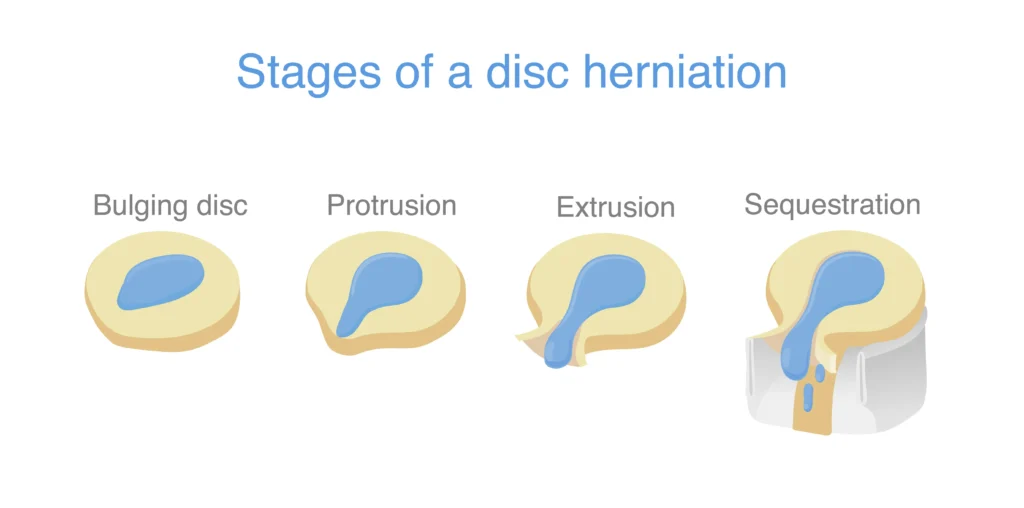
A herniated disc occurs when the soft, gel-like substance in the middle of the disc breaks through the inner aspect of the disc and protrudes out, usually in the back wall of the disc. This bulging out can pinch the nearby spinal nerves, leading to inflammation and excruciating pain that might even radiate down your leg or arm.
Even when the disc doesn’t affect the nerves, it is infamous for causing sharp and intense pain in the lower back, affecting your ability to move, especially standing upright, and interfering with your overall quality of life. For some, the pain is so unbearable that it hampers even the simplest daily tasks, like sitting, moving, or lying down to sleep.
The silver lining? Our skilled physical therapists can teach you how to manage your debilitating pain and provide the tools to return to a pain-free life!
Effective Solutions for Herniated Disc
At your first visit, one of our experienced physical therapists will perform a comprehensive assessment, including a medical history and physical examination. Afterward, your physical therapist will design a personalized treatment plan specifically for your unique situation that may include the following:
Manual Therapy
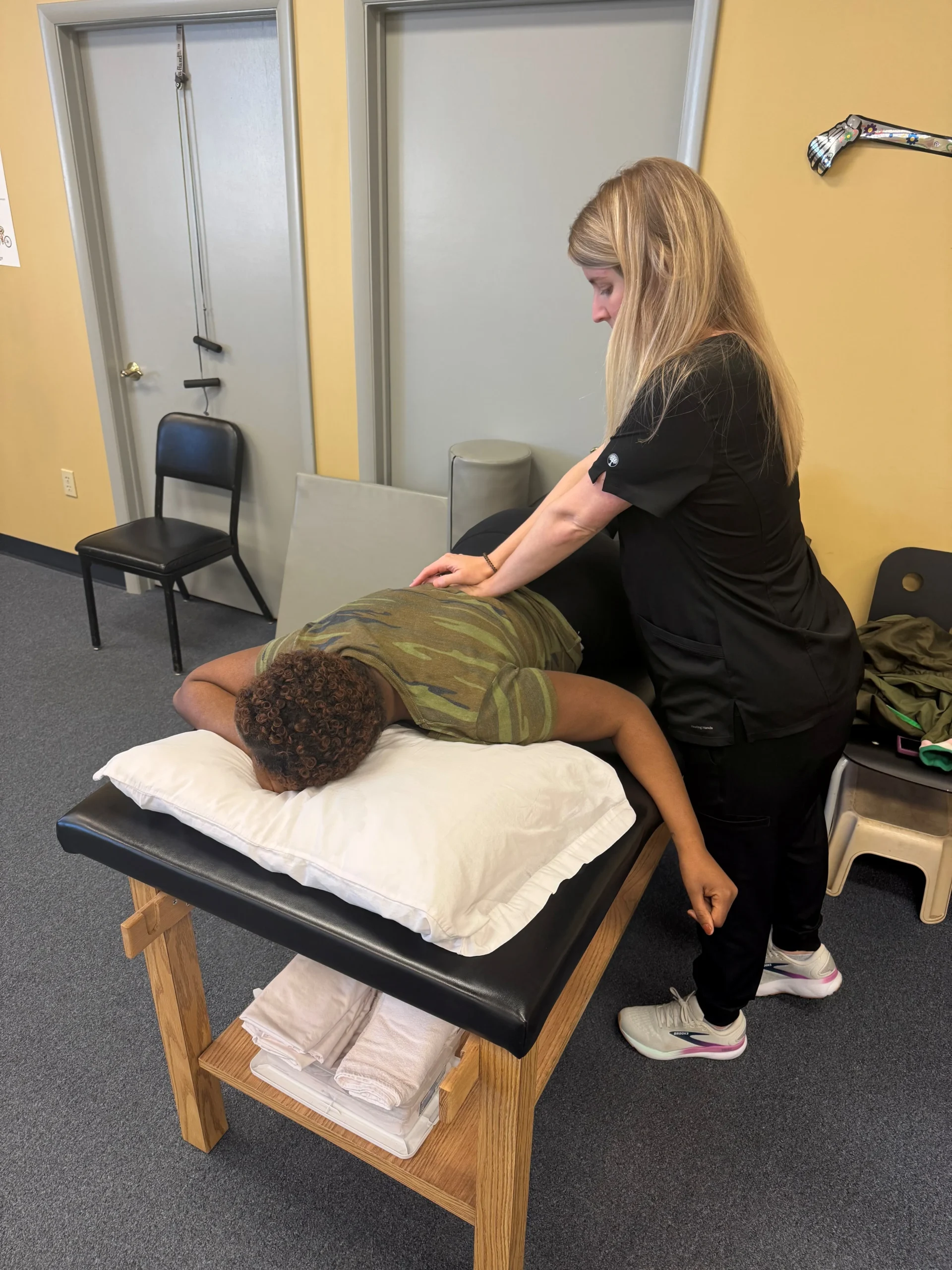
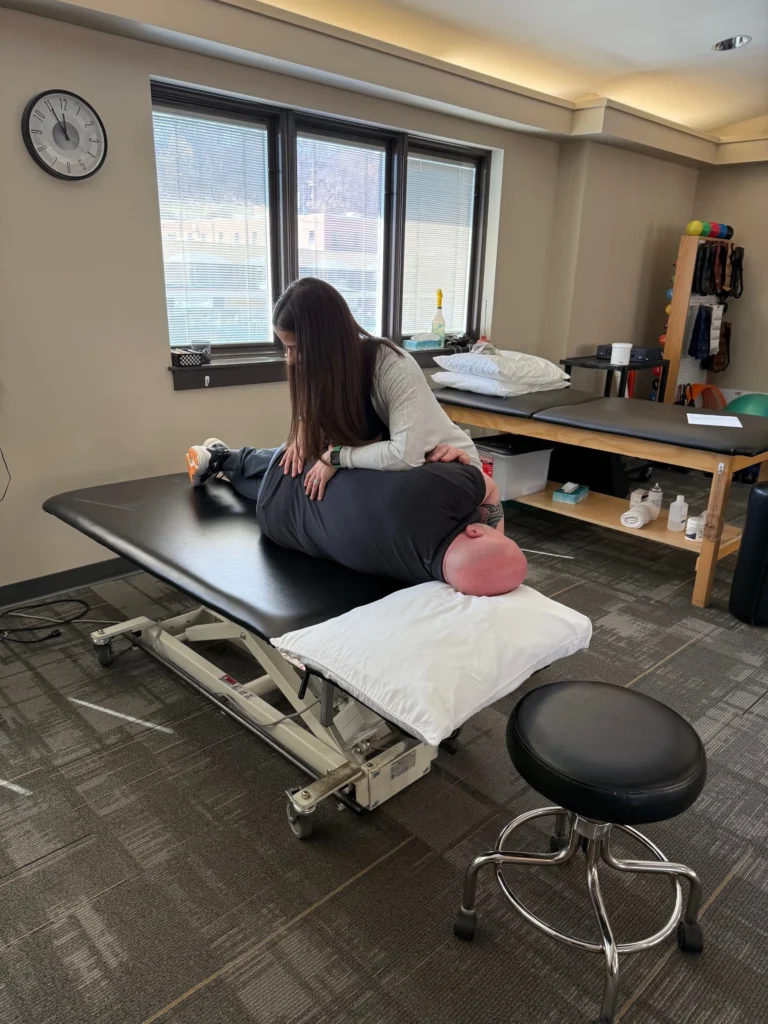
Our physical therapists use passive movement techniques, called mobilizations, to improve the range of motion in the spine, reducing stiffness and pain.
Stretching and Mobility Exercises
Targeted stretches to improve spine mobility and muscle flexibility are often the starting point. As you move better, you’ll feel better!
Core Strengthening
Exercises like planks and bridges can help stabilize the spine and help in improving proper techniques when performing movements like squatting or lifting activities.
Neural Mobilization
Our therapists may use neural mobilization or “nerve gliding” exercises to relieve nerve tension, which can reduce the radiating pain commonly associated with herniated discs.
Understanding the condition and its management is crucial. Our experts often educate the patient about body mechanics, lifestyle changes, and long-term exercise strategies to prevent future episodes. We know that your first step to recovery starts with understanding.
Why Wait?
Call The Physical Therapy Institute today for a comprehensive evaluation and learn the steps you can actively take to recover from a herniated disc and guard against future occurrences. Book your life-changing appointment today!
Unconventional Yet Highly Effective Tips to Help Your Back Pain
Back pain is one of the most common ailments affecting adults worldwide. While there are various conventional treatments and strategies for dealing with back pain, prevention remains the best approach. Here are a few uncommon yet highly effective tips for preventing back pain that you can try at home.
Diaphragmatic Breathing
Diaphragmatic breathing is not just for Yoga enthusiasts. This breathing technique engages your diaphragm, reduces your heart rate, and helps in relaxation. Surprisingly, it also helps in stabilizing your core. A strong core can better support your back, preventing back pain.
How to do it:
- Lie on your back with your knees bent. Place one hand on your chest and another on your abdomen.
- Inhale deeply through your nose, allowing only your abdomen to rise.
- Exhale through your mouth, engaging your core muscles.
- Practice this for 5-10 minutes daily.
Dynamic Sitting
Sitting for prolonged periods is a leading cause of back pain. Dynamic sitting encourages movement even while seated, making your core muscles work in maintaining posture.
How to do it:
- Choose a chair that allows freedom of movement. Swivel chairs are a good choice.
- Shift your weight periodically and tilt your pelvis by moving your belly button forward, and then tilt your pelvis back, allowing your lower back to “slouch” slightly backward.
- Engage your core muscles intermittently while sitting using the same diaphragmatic breathing mentioned above.
Visualization Techniques
Believe it or not, the mind plays a significant role in perceiving pain. Visualization techniques can not only help in relaxing tense muscles but can also mentally train you to handle pain better.
How to do it:
- Close your eyes and imagine a serene environment.
- Visualize the tension in your back being replaced by relaxed, calm muscles.
- Pair this visualization with deep breathing for better results.
By incorporating these unconventional strategies into your daily routine, you can help prevent the onset of back pain. Always consult our The Physical Therapy Institute providers before starting any new exercise to ensure it’s appropriate for you.
Tim Frigot
Physical Therapist and the Clinic Manager
Tim Frigot is a Physical Therapist and the Clinic Manager at The Physical Therapy Institute in West View. He received his Bachelor’s in athletic training in 2013 and Doctorate in Physical Therapy in 2016, both from Slippery Rock University. He is passionate about helping his patients return to their best and fullest abilities. In his free time, he enjoys golfing, building Lego, spending time with family and friends, and playing with his dog.

Myranda Gonzalez
Physical Therapist
Myranda earned her Bachelor of Exercise and Sports Science degree with a minor in Psychology from Texas State University, and her Doctor of Physical Therapy from Chatham University. She has experience across a variety of settings, including outpatient orthopedics, inpatient rehab, geriatrics, neurology, cardiac, and sports. Myranda believes in providing individualized care tailored to each person’s goals, emphasizing that a diagnosis should never define a patient. Outside of work, she enjoys spending time with her fiancé, family, and friends, exploring Pittsburgh’s local spots, staying active, and hanging out with her pets.

Our Patients Get Great Results
“I received therapy from Kelsie on my right shoulder which has a slightly torn rotator cuff. Kelsie was very kind and provided me with numerous exercises to improve my pain. She also provided equipment that I was able to use at home that I was very grateful for. I would highly recommend Kelsie and the Johnson Road location of the Physical Therapy Institute.” – L.H.

Recipe of the Month: Immunity Soup

Ingredients:
- 1 tablespoon extra virgin olive oil
- 1 medium onion, quartered and thinly sliced
- 3 celery stalks, thinly sliced
- 1 medium carrot, thinly sliced
- 8 medium garlic cloves, very thinly sliced
- 2 tablespoons grated ginger, peeled
- 3/4 teaspoon finely ground white pepper, plus more to taste
- 1 1/2 cups mushrooms, trimmed
- 8 ounces firm tofu, sliced into thin slabs
- 2 1/2 teaspoons fine grain sea salt
- to serve: lots of chopped green onions, sliced watermelon radish, and/or pea shoots
Instructions:
- Heat the oil in a large soup pot over medium heat, and stir in the onion, celery, carrot, garlic, and ginger. Gently sauté just until soft, you don’t want any browning. Add a small splash of water if the pan dries out in the process.
- Stir in the white pepper and 10 cups of water. Dial up the heat to bring the broth to a simmer, and hold there for about 15 minutes. Add the mushrooms, tofu, and salt, and gently simmer for another 5 minutes. Stir well, taste, and adjust with more salt or water if needed.
- Ladle the soup into shallow soup bowls and top with lots of green onions, pea shoots, and a few watermelon radish slices. Add a finishing drizzle of olive oil, and enjoy!